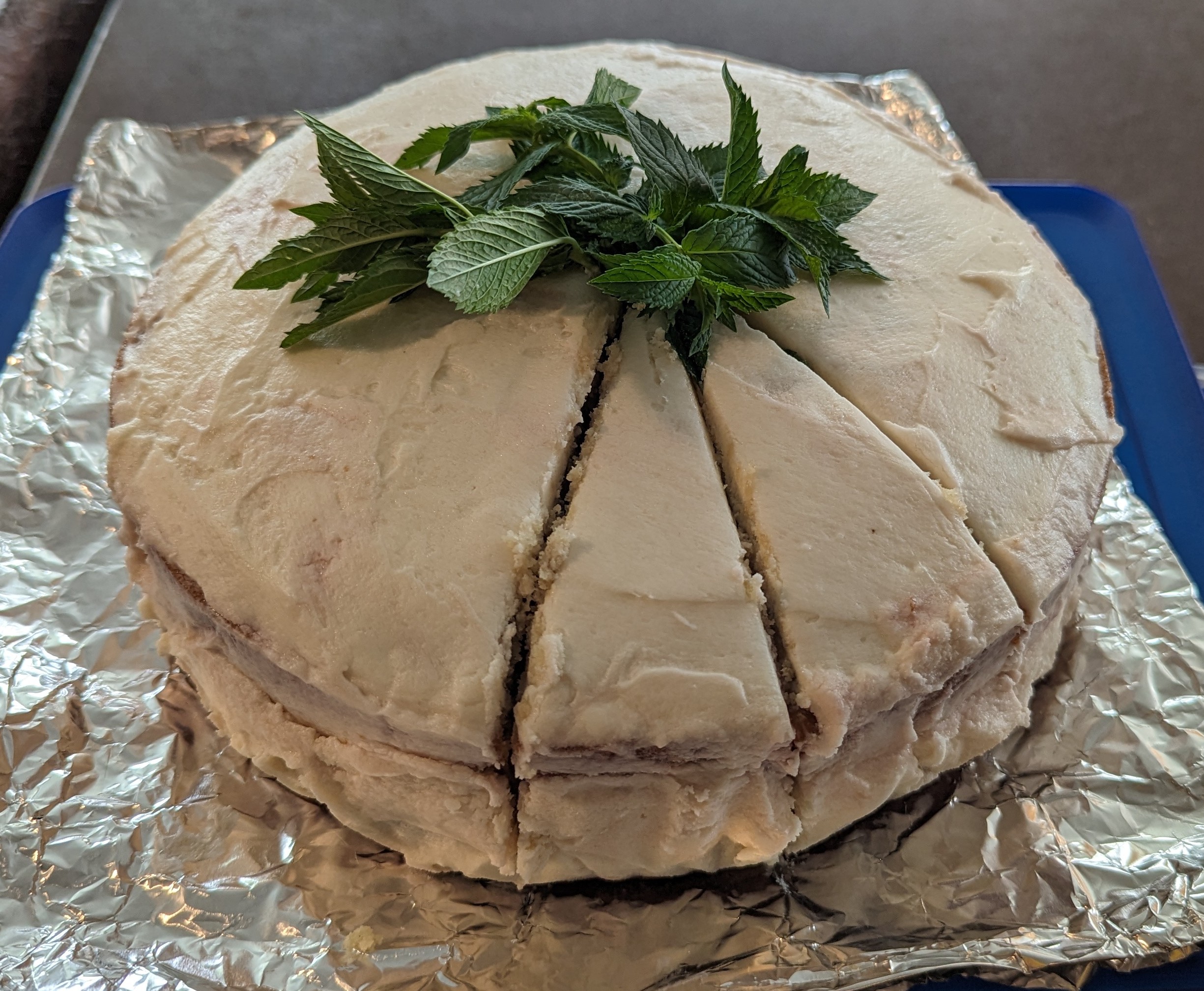
This is a good, basic vanilla cake recipe, which I’ve used to make a blueberry sekanjabin cake as seen in the photo above. The nice thing about a vanilla cake is that it’s easy to switch up the flavors to experiment with different flavor combinations. Perhaps fortunately for me, I’m better at combining flavors than I am at decorating cakes, ha. But as far as gluten-free recipes go, this one was a hit at a gluten-free potluck! I’ve added additional instructions for this version further below.
The original vanilla cake recipe author recommends expensive fancy gluten-free flour blends, though I used a more basic one-to-one gluten-free flour and it worked out just fine. The batter makes two 8-inch round cakes that are about an inch thick with the consistency of a pound cake.
2 cups gluten-free flour
1 teaspoon xanthan gum (omit if your flour already contains it)
6 tablespoons cornstarch
1/2 teaspoon baking soda
2 teaspoons baking powder
1/2 teaspoon kosher salt
4 egg whites at room temperature
1 egg, room temperature
1 1/3 cups buttermilk, room temperature
2 teaspoons vanilla extract (or substitute another extract like blueberry)
10 tablespoons unsalted butter, room temperature
1 1/2 cups granulated sugar
Preheat the oven to 350F. Grease 2 8-inch round cake pans and line the bottom of each with a round of parchment paper (trace the perimeter of the cake pan on the parchment, then cut out the circle). Set the pans aside.
Add the gluten-free flour, xanthan gum, cornstarch, baking soda, baking powder, and salt to a medium-sized bowl and whisk to combine well. Set the dry ingredients aside.
In a separate medium-size bowl, whisk the egg whites, egg, buttermilk, and vanilla until well combined. Set aside.
In the bowl of a stand mixer fitted with the paddle attachment or a large bowl with a handheld mixer, beat the butter and sugar on medium-high speed for at least 3 minutes, stopping at least once to scrape the entire mixture off the sides and bottom of the bowl, or until very light and fluffy.
Add the dry ingredients to the butter and sugar, alternating with the buttermilk and egg mixture, beginning and ending with the dry ingredients and mixing to combine in between additions.
Once all the ingredients have been added, beat for another minute on medium speed to ensure that everything is combined, then turn over the batter a few times by hand. The batter should be fluffy and relatively smooth, although a few lumps are fine. Do not overmix the batter in an attempt to make it perfectly smooth. It will be relatively thick.
Divide the batter evenly between the two prepared baking pans and smooth each into an even layer with an offset spatula. Bang the bottoms of the pans flat on the counter a few times to break any large air bubbles.
Place the pans in the center of the preheated oven and bake for 20 minutes. Rotate the pans and continue to bake until the cakes are lightly golden brown all over, have begun to pull away from the sides of the pan, and do not jiggle in the center at all (about another 10 minutes). These tests for doneness are more useful than the toothpick test. Do not overbake.
Remove the cakes from the oven and allow to cool in the pans for 15 minutes before turning out onto a wire rack (and removing the parchment paper liners) to cool completely before frosting and serving.
To make the Blueberry Sekanjabin Cake:
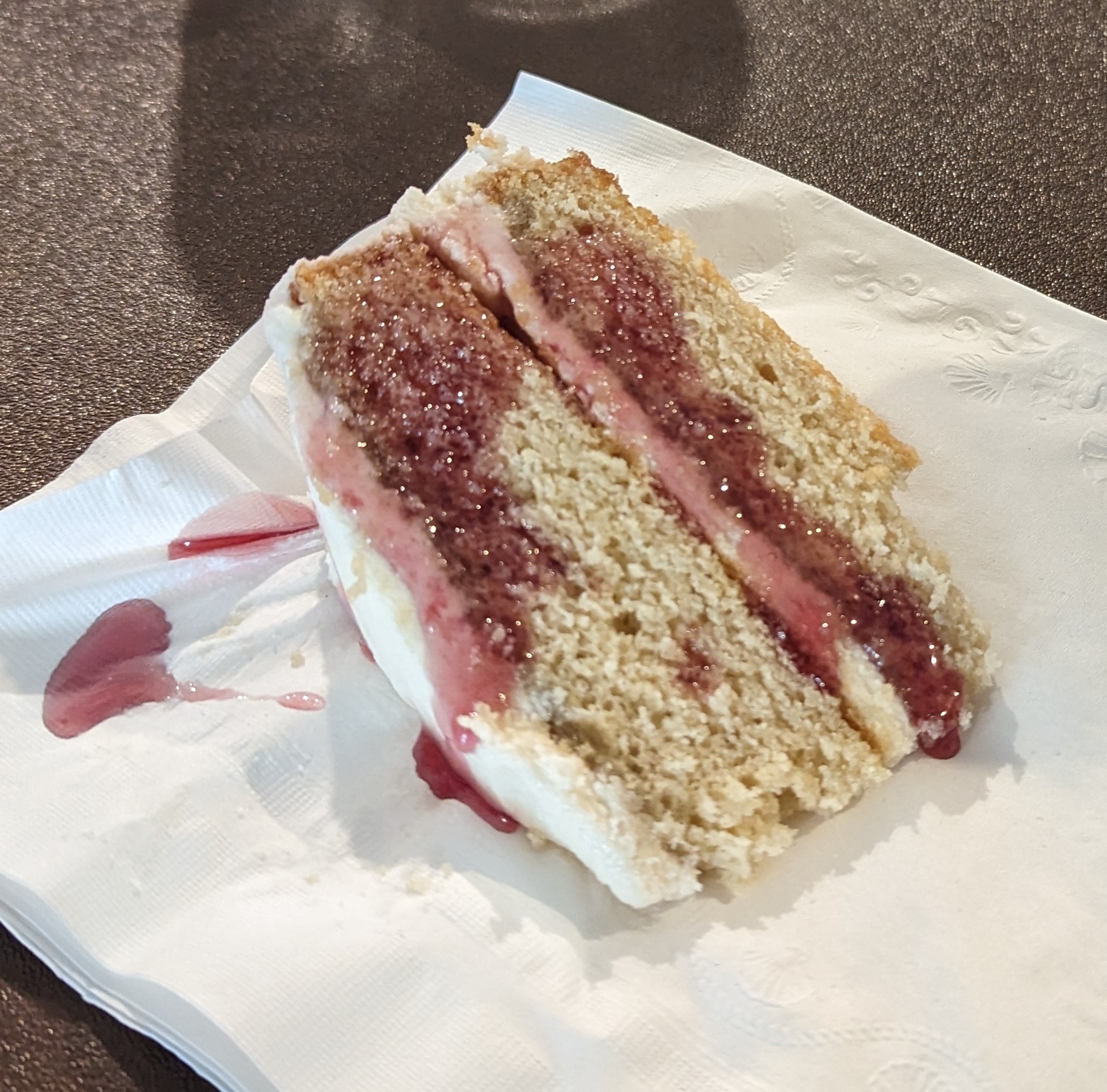
This makes a fruitier cake due to blueberry extract and a fruit-forward sekanjabin, which is a middle-eastern syrup made from stale wine, lemon juice, and mint, and it tastes great on a hot summer day. Follow the recipe above, but substitute blueberry extract for the vanilla. Auntie Arwen’s is a good source for this. You’ll also need:
2 cups sekanjabin, plus more for drizzling (1-2 batches)*
4 cups powdered sugar
2 sticks of room-temperature butter (1 cup)
3 tablespoons milk
Mint sprigs (for decoration)
*I used stale red wine in place of store-bought vinegar. This had an amazing flavor — less astringent and more fruit-forward. The oxidation turned it slightly gray in the cake and frosting, however, so it can’t hurt to try a white vinegar or stale white wine instead.
Make a buttercream frosting by mixing the powdered sugar, butter, milk, and a tablespoon of the sekanjabin syrup until it has a smooth consistency.
Lay wax paper under one cake to make it easier to move (especially if you need to transport it afterwards).
Use a brush to coat the surface of the cake with sekanjabin.
Add a dollop of frosting to the top and use a cake-decorating spatula to carefully smooth it out on top of the syrup layer.
Add the second cake on top of the first one, then add sekanjabin and frosting as with the bottom layer. Use the remaining frosting to carefully fill in the gaps in the side of the cake.
If some of the syrup gets mixed in with the frosting, just run with it and try to make it look intentional.
Decorate with mint sprigs. Serve with the rest of the sekanjabin and let people drizzle it onto individual slices.
 Anne's Kitchen