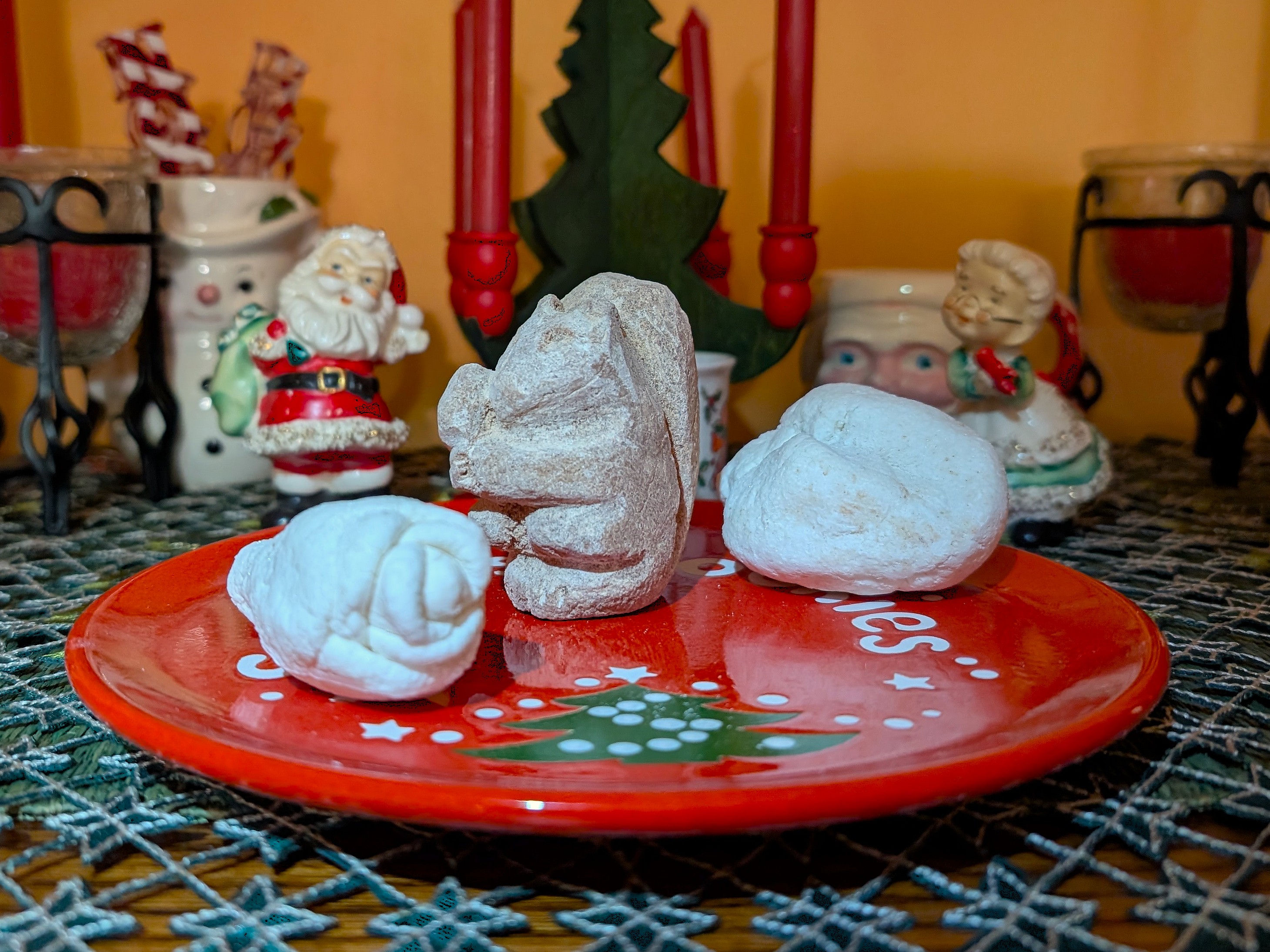
These are examples of sugar work that date back to the late medieval and renaissance periods. I recently took a class on this from Bill Michalski, who researched the subject and shared recipes he cultivated. We’re living in Bill’s sugar world, and I can only relay what I’ve learned from him to save for my own reference here.
Comfits
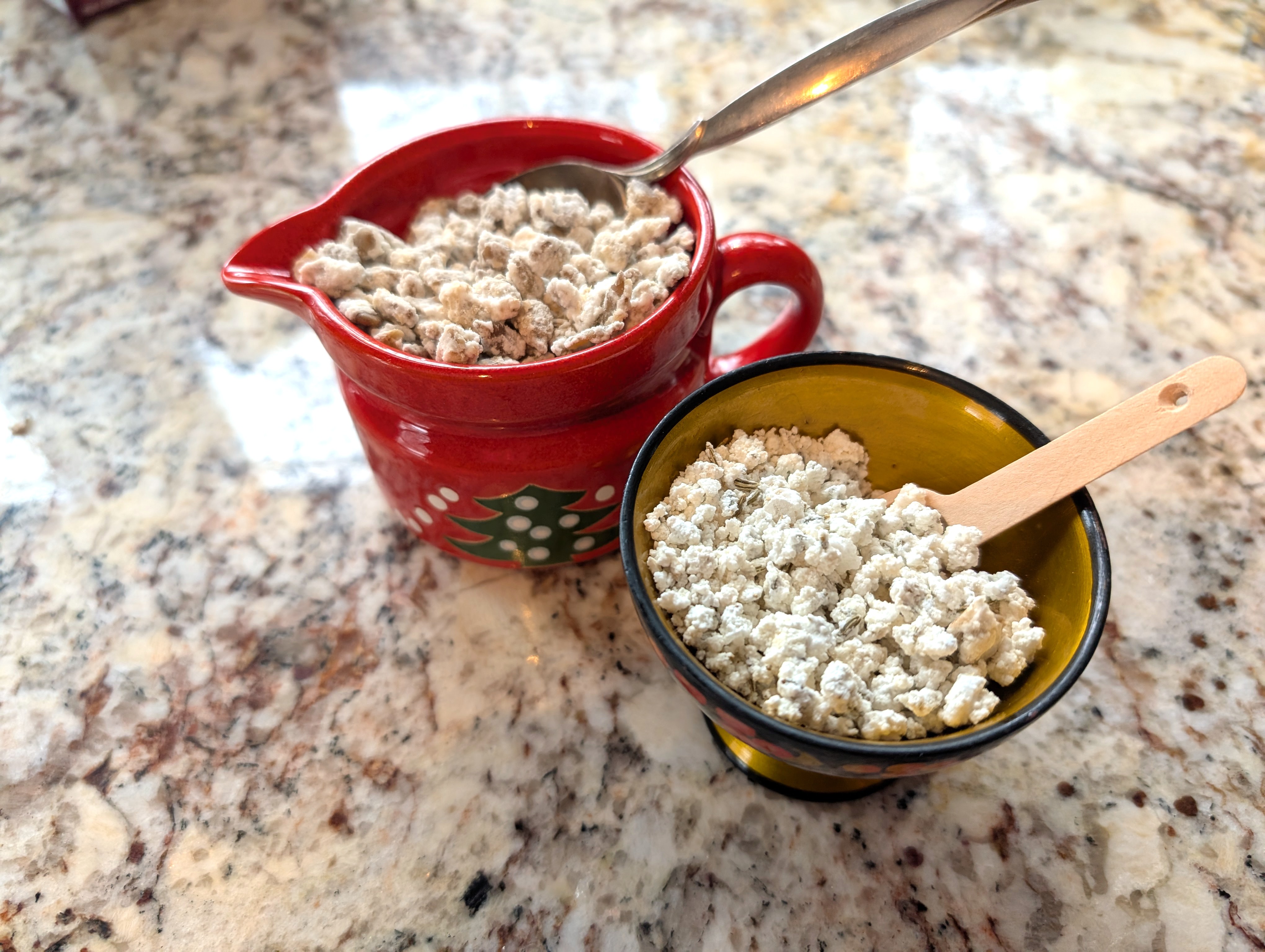
First, comfits: these are sugar-coated seeds, nuts, or dried fruit, sometimes called sugar plums or dragies. Jordan almonds are a type of comfit with a smooth coating of sugar. “Ragged” comfits are a lot easier for home cooks to produce, creating a rough, crystallized sugar coating.
Fennel seeds, sunflower seeds, or other small nuts
1 c. sugar
1/3 c. water
1 tbsp. cinnamon, ginger, clove, cocoa, or other spice (per 4 oz. sugar paste)
Pour the seeds/nuts into a heat-safe bowl.
Cook the sugar and water in a small saucepan until it forms a syrup, stirring to dissolve the sugar. Add the spice.
Continue to heat the syrup until it reaches the soft ball stage, 234-240F.
Add 1-2 spoonsful of syrup to the bowl of nuts and stir quickly to get an even coating. When the first coat is dry, add a second coat. Repeat these steps 5-10 times until everything is thoroughly coated.
For smooth comfits, use a small pan over low heat while coating to speed up the drying process.
Sugar Paste
Sugar paste, on the other hand, is meant to be worked like clay to create sugar sculptures that will harden as they dry out and reach a consistency similar to a candy heart. Once they are hard, they can be carved with carving tools. In the photo at the top, you can see white paste in the “rose” and the lump on the right (excuse my rudimentary carving skills). The brown squirrel was made with a sugar paste seasoned with cinnamon.
Bill indicates that you can save money on the gum tragacanth by grinding it yourself in a spice grinder, though this will make a mess and you’ll probably want to have a spice grinder devoted solely to this ingredient.
The difficulty with this recipe lies in maintaining the right amount of moisture in the paste while you work it. If it’s too wet or too dry, it will be too difficult to sculpt with. The trick is to add just a tiny amount of rose water at a time. I don’t think I had quite enough moisture in my mix, which is why I stopped after making just one attempt at a rose and tossed the rest into a bag. It will keep for a days or so, but if you wait too long (as I did, more than a week), it will harden into a rock. At this point, you can carve it like I did with the squirrel. It’s softer than wood, and you can eat the shavings! Gnawing on a larger piece of hardened paste is a good way to lose a tooth, though.
1 lb. powdered sugar
28 g. powdered gum tragacanth (food-grade), aka gond katira in South Asian food stores
60-70mL rose water (~4 tbsp.)
Optional: 1 tbsp. cinnamon or other spice flavoring
Mix the sugar and gum tragacanth in a bowl. Add any spice if desired.
Slowly mix in the rose water and stir thoroughly. Knead the paste together until smooth. If needed, add small amounts of extra water gradually — too much liquid will make the paste very sticky. It’s better to work with a dry paste than one that’s too wet.
Put the paste into a sealable plastic bag for 30 minutes to rest.
After the paste has rested, it can be sculpted or pressed into molds.
Keep the paste sealed in a bag while not working with it. This will be soft at first and harden after a couple days. Once it is completely dry, it can be carved with a carving knife.
 Anne's Kitchen