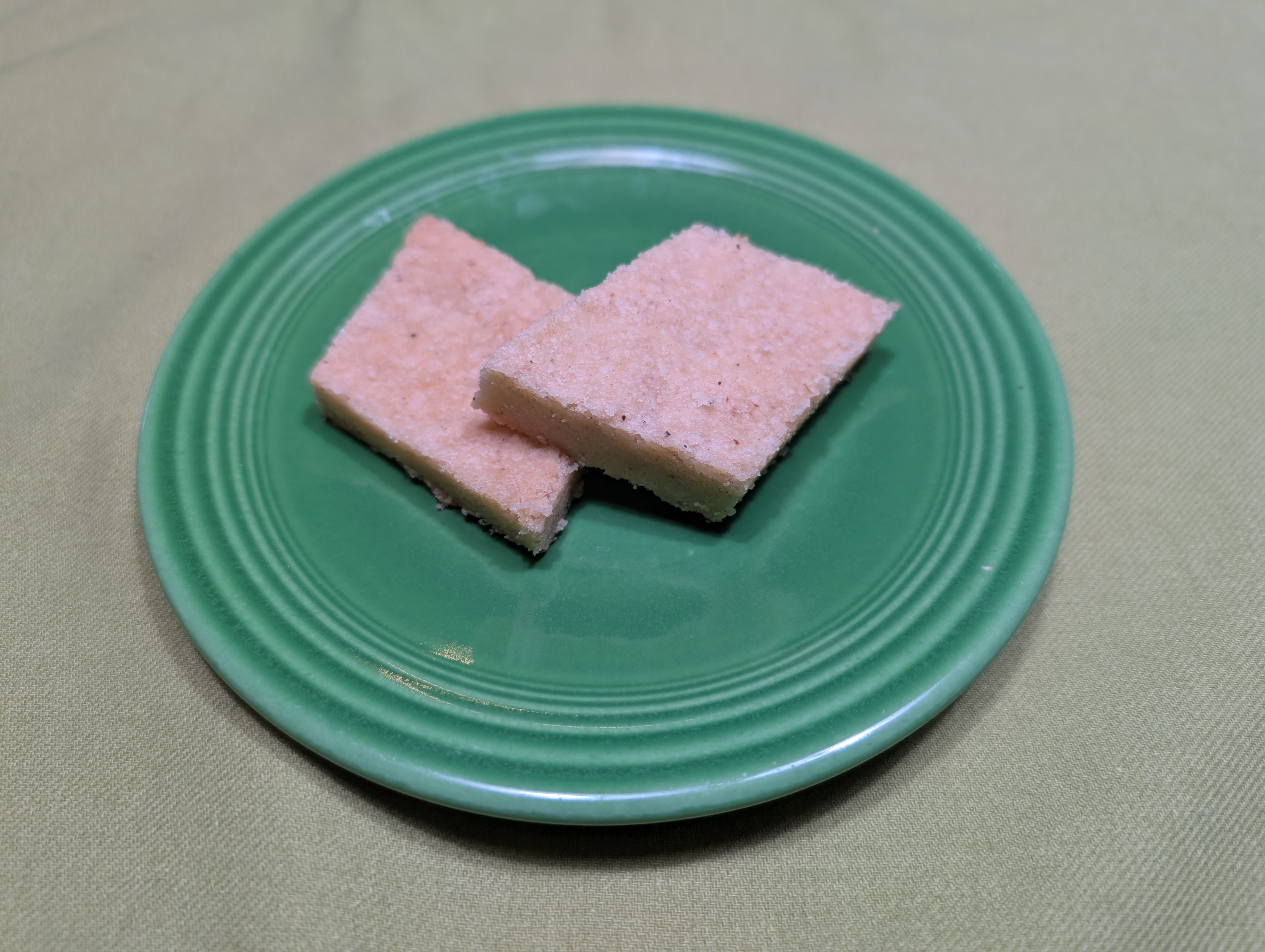
Shortbread is a light, buttery sweet that dates back to 12th-century Scotland or in various other parts of the world in various forms. It’s easy to make and can be customized to include different flavors or toppings. The version in the photo above includes a little cardamom because I think it’s an underrated spice. Feel free to substitute other extracts or add a different spice, etc. to suit your mood.
You can also use this recipe to make molded cookies or with cookie cutters — instructions for that are below the tray bake version. This is a level up from easy as it involves rolling dough, and using cookie molds is even more challenging, but can result in a beautiful cookie if you have the time and patience. Recipe shared by Sandy Erickson.
Tray Bake:
1/2 lb room-temperature unsalted butter (salted butter minus the salt below is ok) (2 sticks)
3/4 cups granulated sugar
1/2 tsp salt (table salt, not Kosher salt)
1/2 tsp vanilla extract (or substitute another flavor such as lemon or almond)
2 1/2 cups all-purpose flour, sifted
Optional: 1 tsp. cardamom, cinnamon, or another spice of your choosing
Let the butter come to room temperature before you begin. Preheat the oven to 300F.
Using the paddle attachment of a stand mixer, cream the butter, sugar, and salt on low speed.
Add the vanilla and mix until blended.
Add the flour to wet ingredients and mix until they’re combined. Congratulations, you have a big pile of crumbs!
Grease a 9×13″ pan and press the crumbs in until you have a more or less smooth surface.
Bake for 15 minutes. Let it cook, then cut into pieces — if you’re feeling creative, cut diagonally to make diamonds or triangles instead of squares.
Molded/Shaped Cookies:
Follow the recipe above until you get the big pile of crumbs. Press them together into a ball of dough, then wrap in plastic and chill in the refrigerator for 35-40 minutes. Be gentle with the dough while wrapping it. Overworking the dough will toughen the cookies.
Preheat the oven to 300°F. Grease a cookie sheet or line with parchment paper.
Prepare a large cutting board with a light dusting of flour and leave a small supply of flour on the side. Don’t use any more flour than you absolutely need, or it will make the cookies tougher. Unwrap the chilled dough and transfer it to the cutting board. Dust a rolling pin with flour and roll the dough out to about one-quarter of an inch thick.
Use cookie cutters to cut out the cookies, spacing as closely together as possible to reduce the number of times you have to re-roll. If you are using a cookie mold, use a cookie cutter close to the size of the mold and cut them out first. Lightly dust the mold with a new paintbrush (not one that has been used for painting). Gently press the dough into the mold and turn out carefully. Place the raw cookies carefully on the prepared baking sheet.
If you are working at this for a while, you might need to put the dough back in the fridge to chill. It will be easier to work with when it’s cold, and the room temperature and your hands will keep warming it up.
Bake for around 15 minutes or until the edges and bottoms of the cookies are barely beginning to turn golden brown.
When the cookies are cool enough to handle but still warm, remove them from the pan and cool them on a wire rack. Be sure to wait until they’re no longer warm before packing them into a sealed container.
 Anne's Kitchen